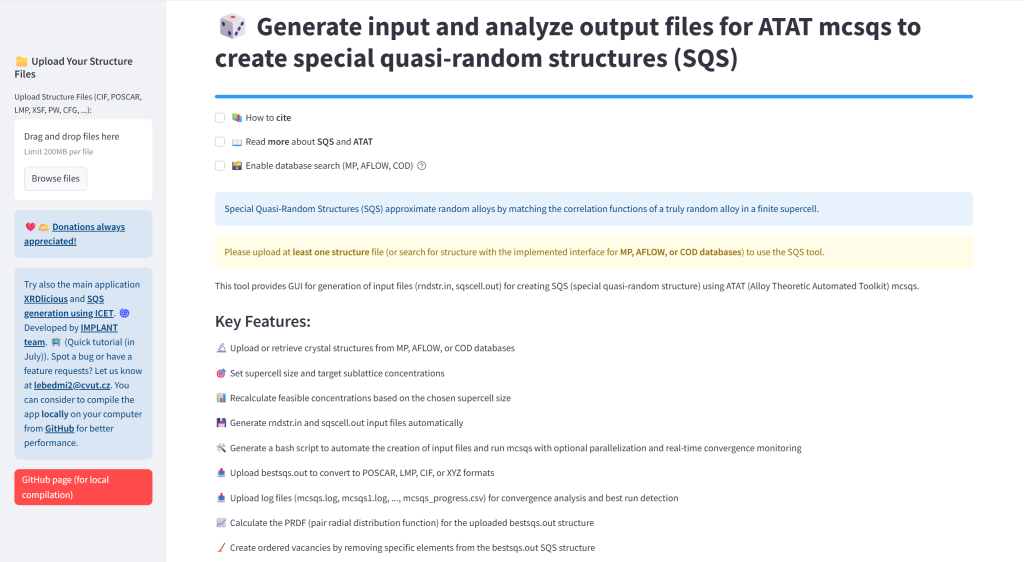
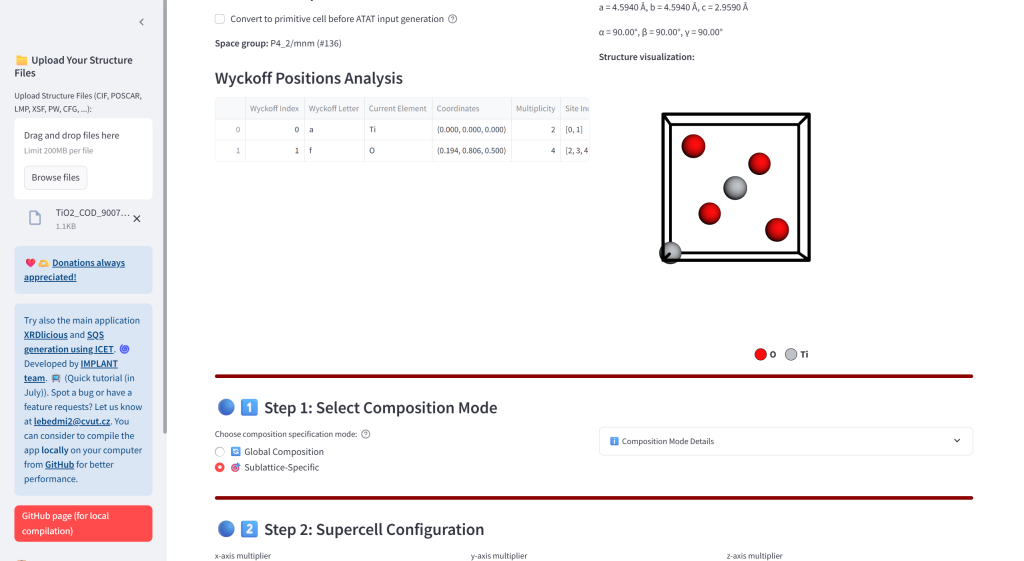
Upload crystal structures or retrieved them from implemented search interface in MP, AFLOW, and COD databases.
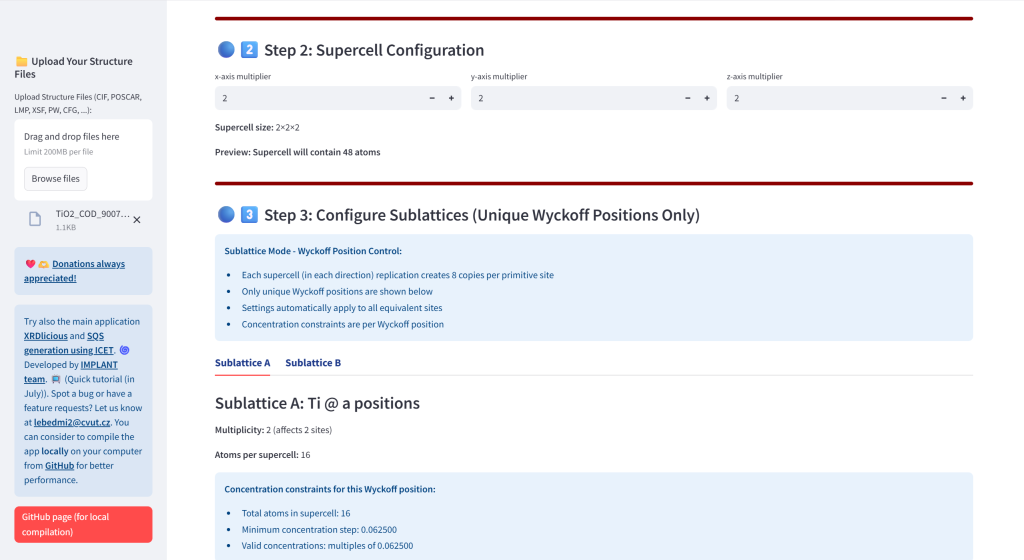
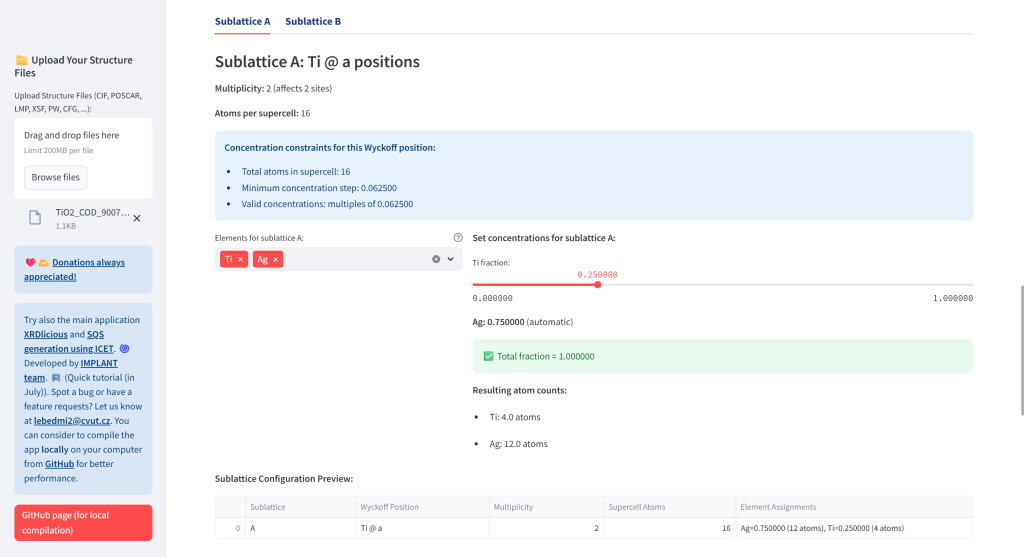
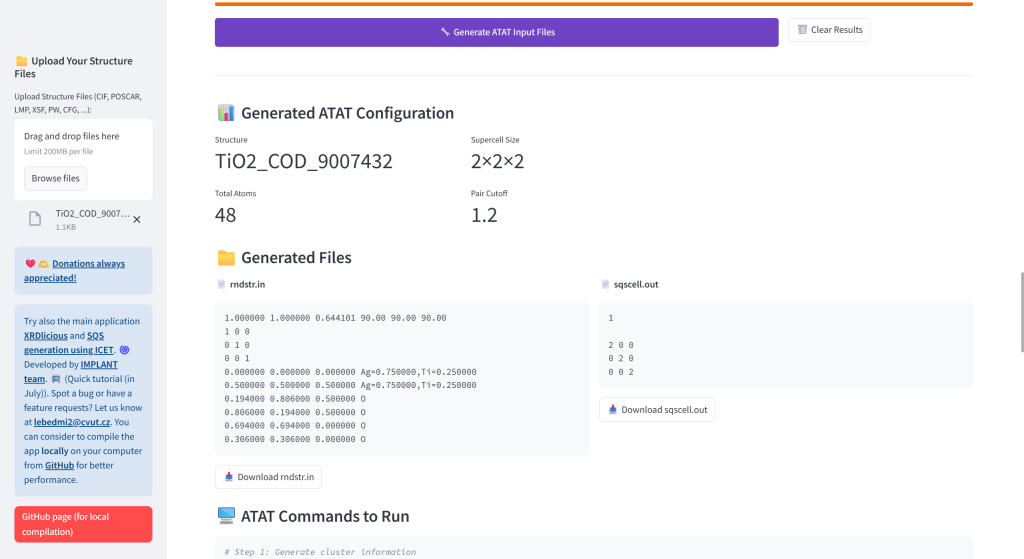
Generate ATAT Input Files: Create rndstr.in and sqscell.out files with global or sublattice-specific composition control. The concentrations are automatically recalculated for the achiavable concentrations given the total number of atoms in supercell.
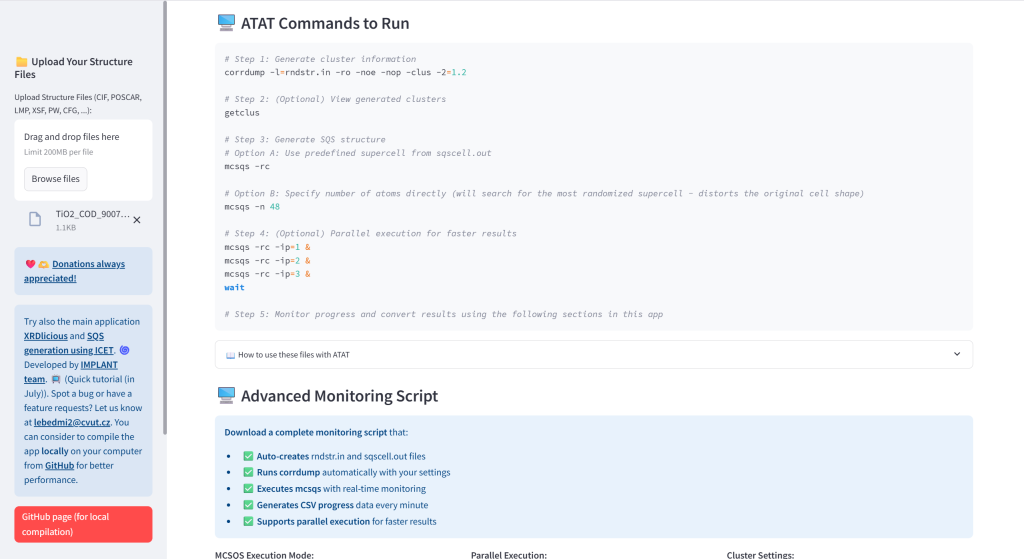
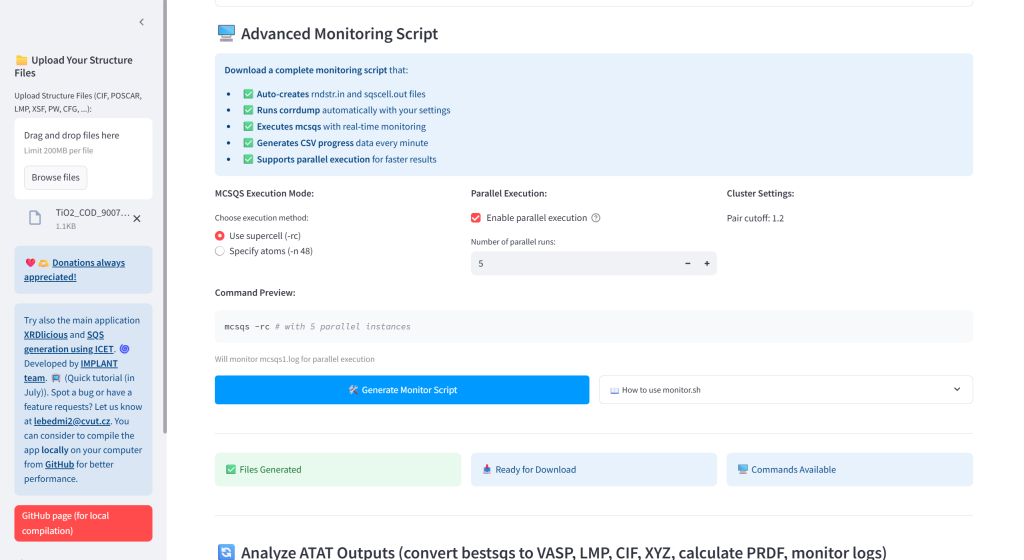
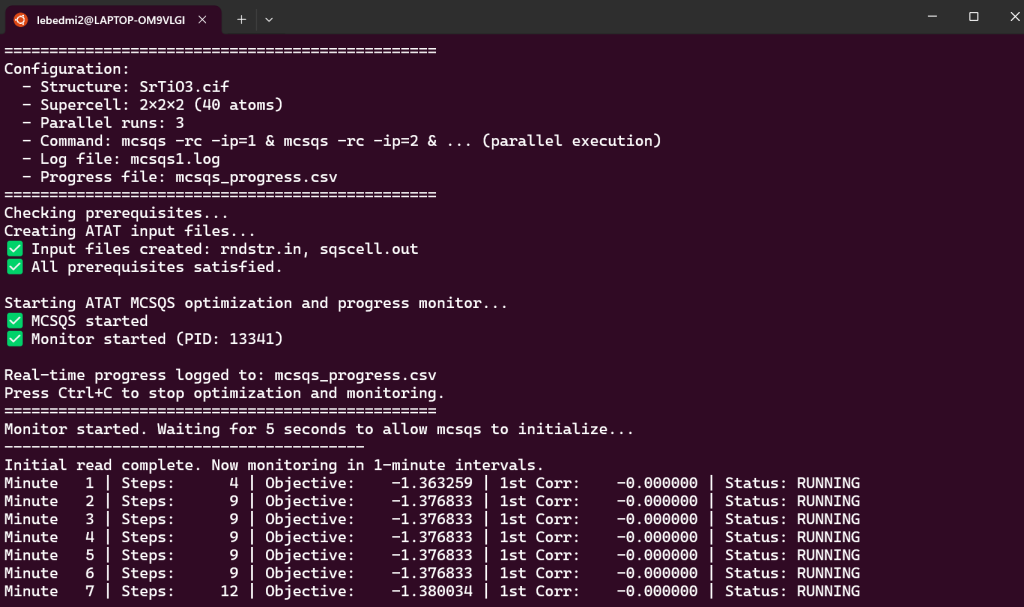
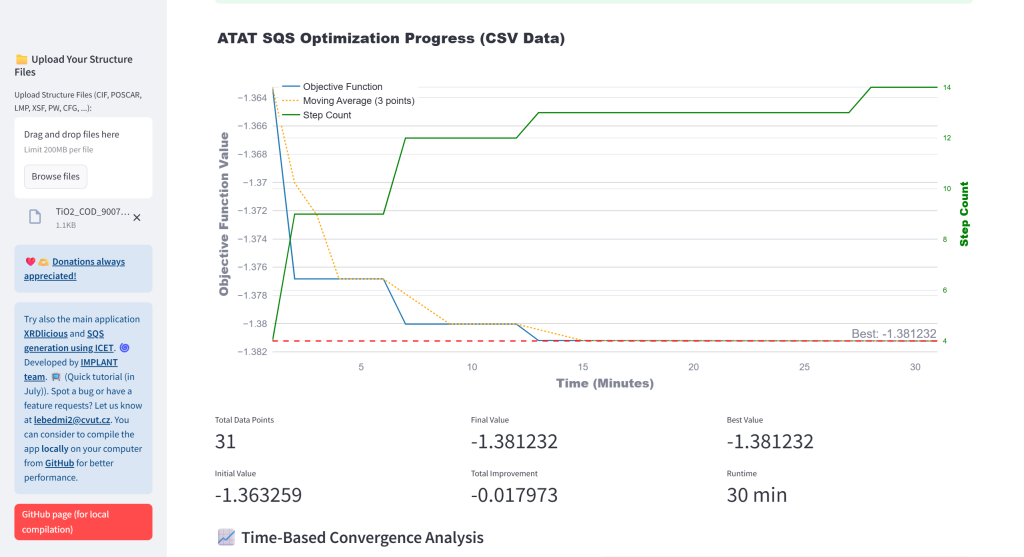
Generate complete bash script that will create the rndstr.in and sqscell.out and run the ATAT mcsqs with improved monitoring and creating the mcsqs_progress.csv
Generate complete bash script to automate the SQS search across a range of compositions for a binary alloy system.
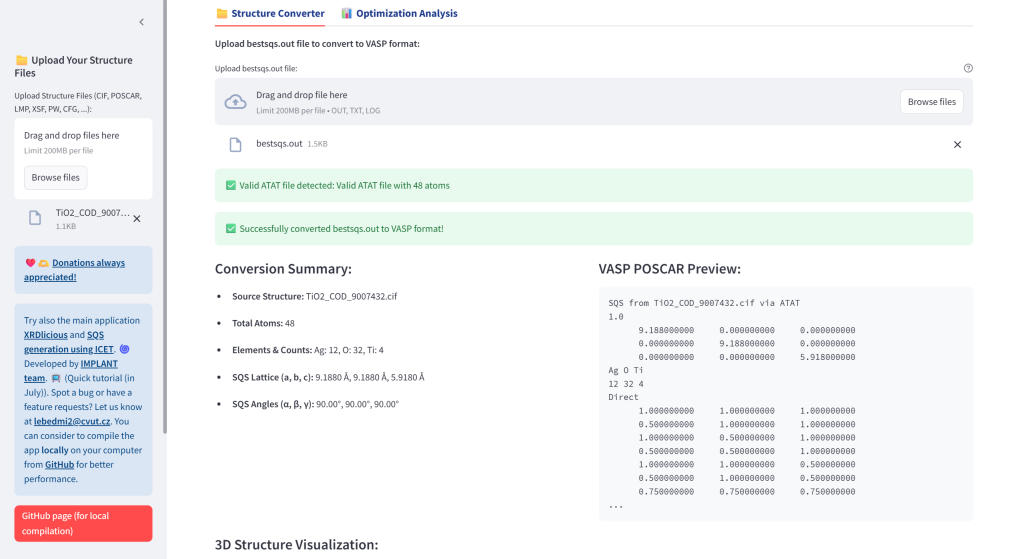
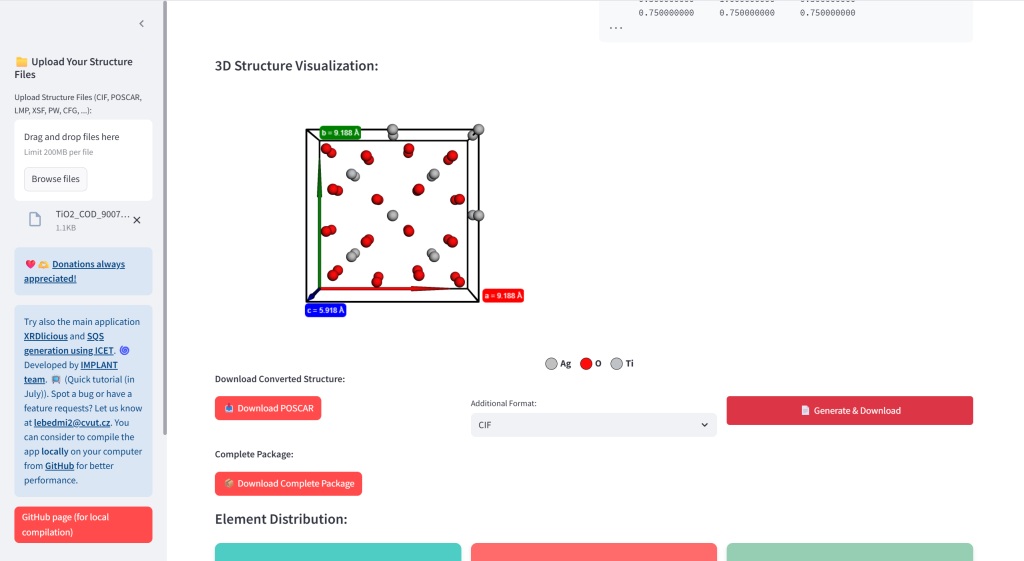
Convert ATAT Output: Transform bestsqs.out files to VASP, CIF, LAMMPS, and XYZ formats with 3D visualization
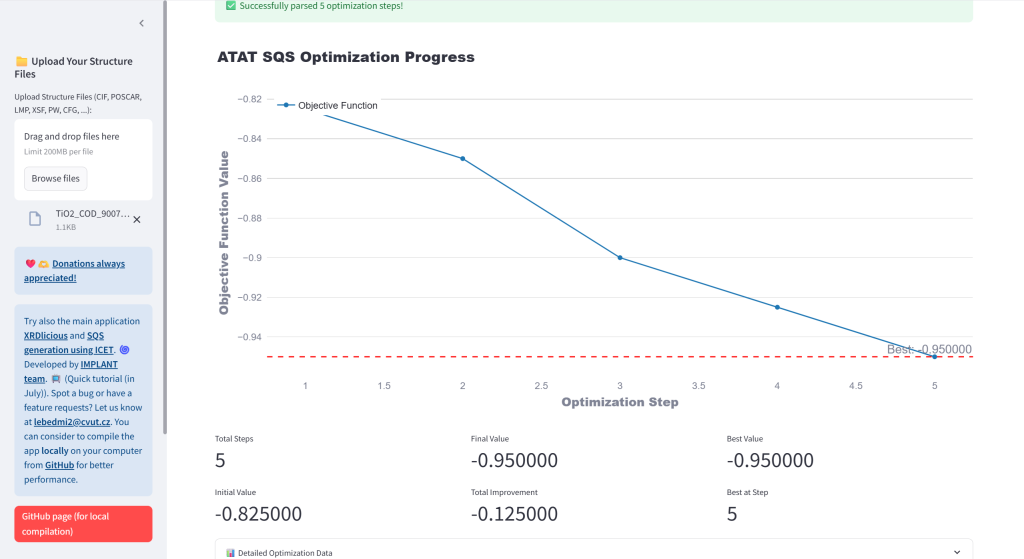
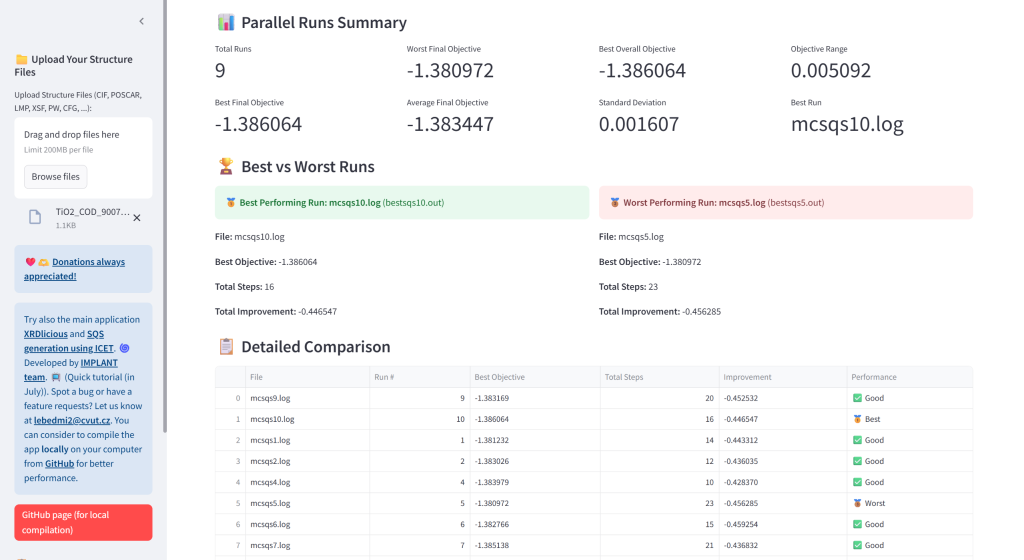
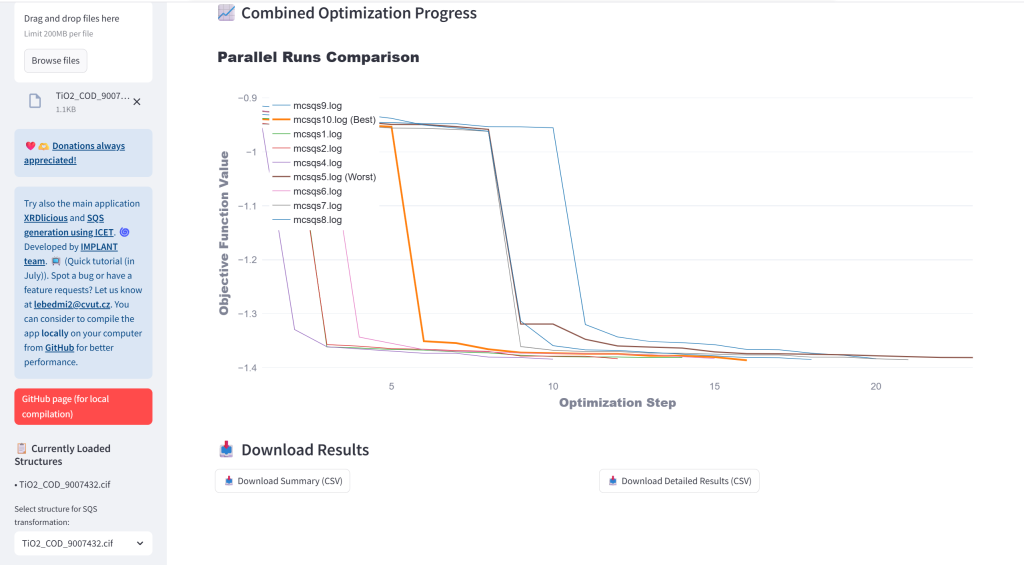
Monitor Optimization: Analyze ATAT convergence from log files (mcsqs.log or at once for parallel run with mcsqs1.log, mcsqs2.log, …) and CSV time progress file (mcsqs_progress.csv) data with interactive plots and main information. For parallel run, it will automatically identify the best performing optimization
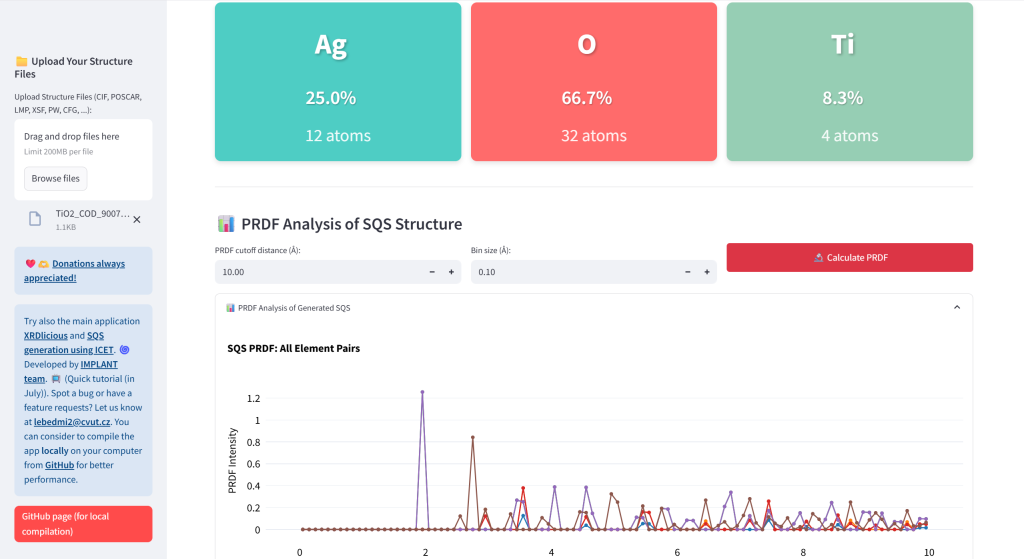
Calculate PRDF: Compute Partial Radial Distribution Functions for SQS
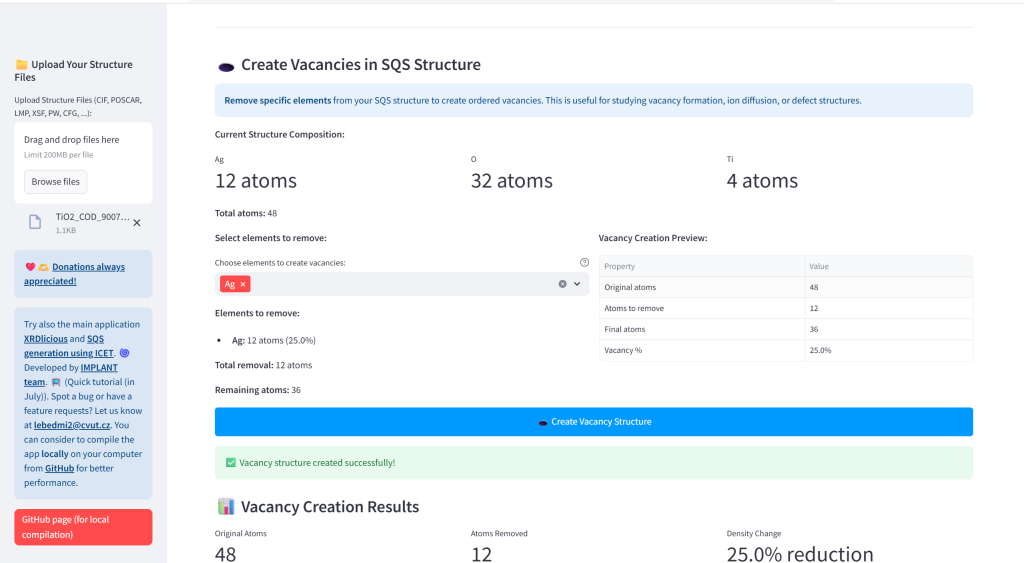
Create Vacancy Structures: Generate ordered defects by selectively removing specific element from the SQS